Personal Protective Equipment (PPE)
Last resort in the hierarchy, used correctly
Practice this topic →Last reviewed June 2026 by the White Card Practice AU editorial team.
About this topic
Personal Protective Equipment (PPE) is the gear you wear to protect yourself, hard hats, hi-vis, boots, gloves, eye and hearing protection. It is essential on every construction site and a core White Card (CPCWHS1001) topic. But there is one big idea the test wants you to understand: PPE is your last line of defence, not your first.
Common types of PPE
Different jobs call for different gear. The most common construction PPE includes:
- Head protection – hard hats (AS/NZS 1801) against falling objects.
- High-visibility clothing – hi-vis vests and shirts (AS/NZS 4602) so plant operators can see you.
- Foot protection – steel-cap safety boots (AS/NZS 2210).
- Eye protection – safety glasses or goggles against dust, debris and sparks.
- Hearing protection – earplugs or earmuffs around loud plant.
- Hand protection – gloves suited to the task.
- Respiratory protection – masks or respirators against dust and fumes.
PPE is the last line of defence
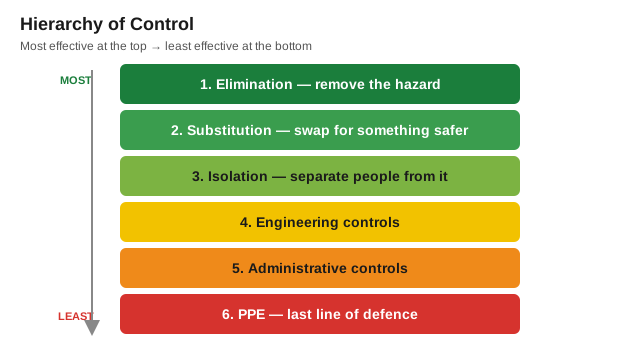
In the hierarchy of control, PPE sits at the very bottom. That is because it only protects the individual wearing it and does nothing to remove the hazard. Wherever possible, the hazard should be eliminated or controlled by higher measures first, with PPE used to manage whatever risk is left over.
Your responsibilities with PPE
Your employer (the PCBU) must provide the right PPE at no cost to you, along with training on how to use it. Your job is to wear it whenever required, check it before use, store it properly, and report any damage or wear so it can be replaced. PPE that is faulty or worn incorrectly may not protect you.
Key facts to remember
- PPE is the least effective control, it only protects the wearer.
- Your employer must provide required PPE at no cost to you.
- Common PPE: hard hat, hi-vis, safety boots, eye and hearing protection, gloves.
- Hi-vis exists so machinery and vehicle operators can see you.
- Check PPE before each use and report damaged gear.
Frequently asked questions
Is PPE the most effective safety control?
No. PPE is the least effective control in the hierarchy because it only protects the person wearing it. Eliminating or engineering out the hazard protects everyone and comes first.
Who pays for PPE on a construction site?
Your employer (the PCBU) must provide the PPE you need to do your job safely at no cost to you, along with training on how to use it.
What PPE is usually required on site?
Typically a hard hat, high-visibility clothing and steel-cap boots as a minimum, plus eye, hearing, hand or respiratory protection depending on the task.
Do I still have to wear PPE if I think it's unnecessary?
Yes. If PPE is required for the task or the site, you must wear it. It is both a site rule and part of your duty to take reasonable care for your own safety.
Sample exam questions
Try these example questions, then practise the full set with our free quiz.
Q. Where does PPE sit in the hierarchy of control?
- A) First, most effective
- B) Last, least effective
- C) Second
- D) It isn't part of it
Answer: B. PPE is the last line of defence because it only protects the wearer and doesn't remove the hazard.
Q. Who must provide the PPE you need for your job?
- A) You, at your own cost
- B) Your employer (the PCBU), at no cost to you
- C) The government
- D) Nobody
Answer: B. The PCBU must provide required PPE free of charge and train you to use it.
Q. Why is high-visibility clothing worn on site?
- A) For appearance
- B) So machinery and vehicle operators can see you
- C) For warmth
- D) Union rules
Answer: B. Hi-vis makes you visible to plant and vehicle operators, reducing the risk of being struck.
Related topics
Ready to test yourself?
Our 552-question bank includes dedicated drills for every topic.
Start Personal Protective Equipment (PPE) drill Full practice test